AzureRTOS Dual-Core Implementation for STM32H747
A dual-core embedded application for the STM32H747I-DISCO board utilizing AzureRTOS (ThreadX) and GUIX. It demonstrates a distributed architecture where the Cortex-M4 manages I2C sensor data and peripherals while the Cortex-M7 handles the graphical user interface and display logic.
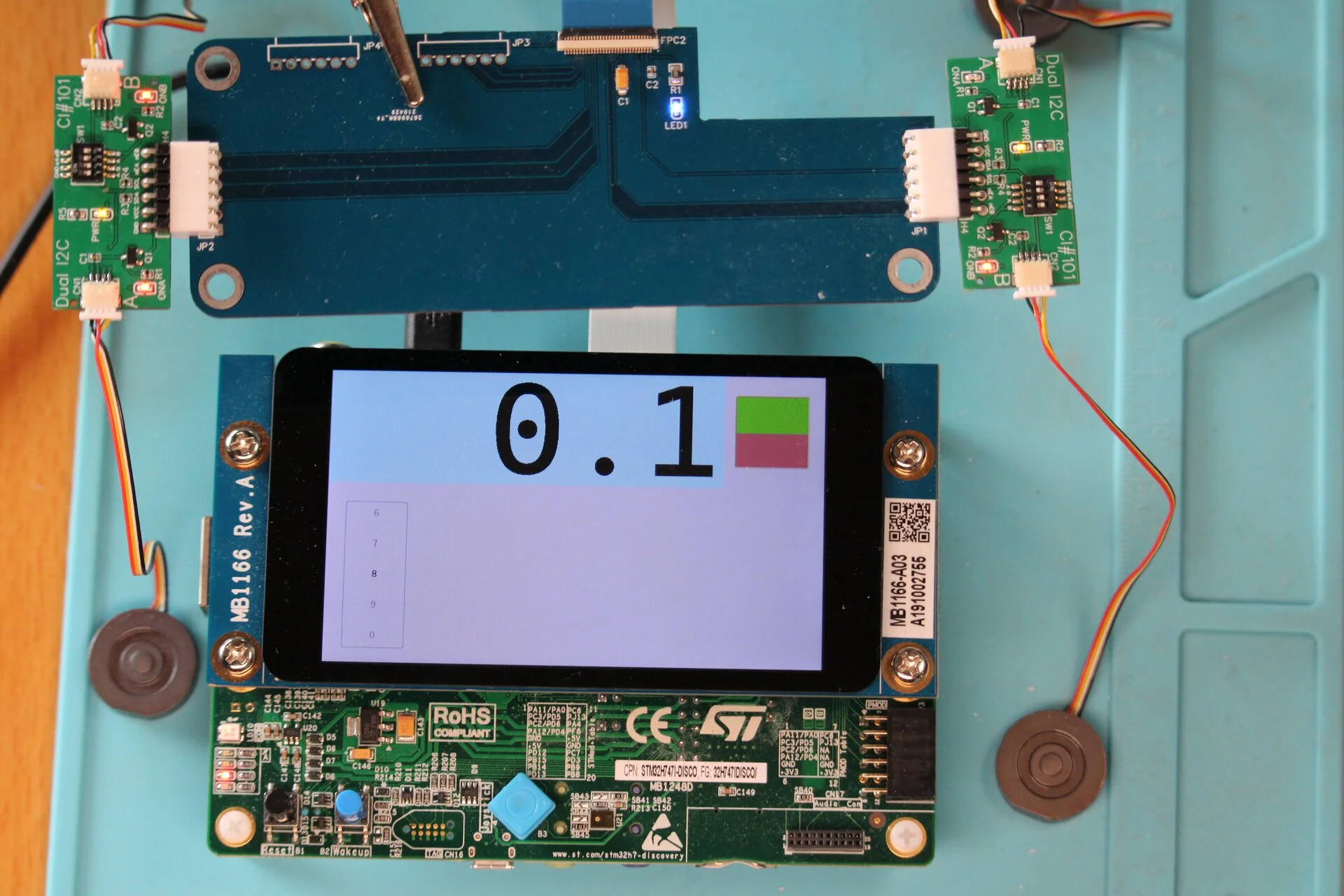
Overview
The H747-Test project is a sophisticated demonstration of the dual-core capabilities of the STM32H747 microcontroller. By leveraging the AzureRTOS suite, specifically ThreadX and GUIX, the project implements a distributed task model across the ARM Cortex-M7 and Cortex-M4 cores. The project was built using STM32CubeMX and incorporates elements from the high-performance LCD DSI command mode examples provided by STMicroelectronics.
System Architecture
The project is divided into two distinct firmware images, each running its own instance of the ThreadX RTOS. This separation allows for efficient task management and real-time responsiveness by offloading low-level peripheral handling to the M4 core while reserving the M7 core for heavy lifting such as graphics rendering and complex logic.
Cortex-M4: Peripheral Management
The Cortex-M4 core acts as the primary interface for hardware sensors and communication. Its responsibilities include:
- I2C Data Acquisition: Reading data from I2C1 and I2C4 (including the touch-screen interface).
- Inter-Core Communication: Placing retrieved sensor data into shared memory locations accessible by the M7 core.
- Status Indication: Toggling an orange LED and outputting system logs via UART.
Cortex-M7: UI and Logic
The Cortex-M7 core focuses on the user experience and high-level processing:
- Display Management: Initializing the LCD display through Board Support Package (BSP) calls.
- GUIX Integration: Running the GUIX framework to manage the graphical interface.
- Event Handling: Retrieving touch data from shared memory to post PEN events for the GUI, and updating display values based on sensor data provided by the M4 core.
- Visual Feedback: Toggling blue and green LEDs based on touch events (PEN_DOWN and PEN_UP).
Graphical User Interface
The interface is designed using GUIX Studio, allowing for a professional-grade UI with minimal manual coding. The project specifically utilizes the Cascadia Code font, which was converted into a GUIX-compatible format using GUIX Studio’s font generation tools. The UI includes a timer-driven update mechanism that periodically refreshes displayed values with the latest data from the shared memory buffer.
Technical Implementation Details
The project serves as an excellent reference for developers looking to implement shared-memory communication between cores on the STM32H7 series. By using AzureRTOS on both cores, it provides a unified development experience while maintaining the strict timing requirements necessary for both sensor polling and smooth UI animations. The integration of GUIX as a git submodule ensures that the graphics stack remains modular and easy to update.