MaixPy (v4)
A Python SDK for edge AI vision and audio applications targeting Sipeed's MaixCAM and MaixCAM2 hardware. It provides high-level APIs for NPU-accelerated AI models, image processing, and peripheral control on RISC-V and ARM-based embedded systems.
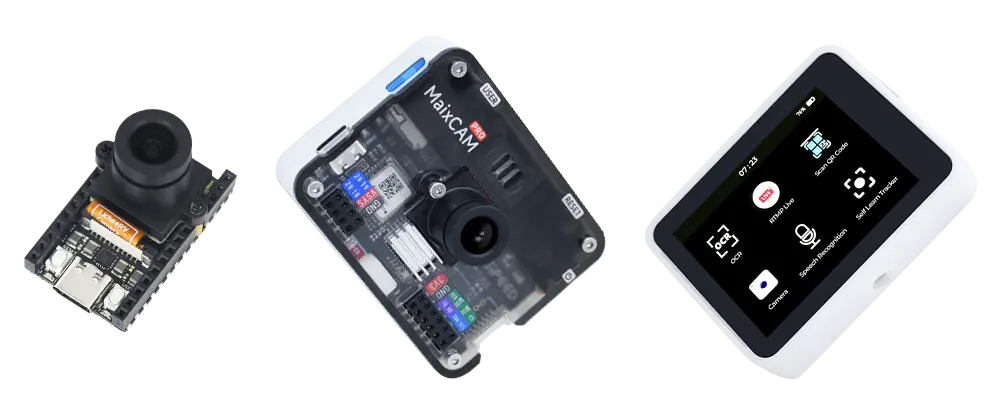
Overview
MaixPy (v4) is a powerful development framework designed to simplify the deployment of AI vision and audio projects on edge devices. Developed by Sipeed, it combines the ease of Python 3 programming with high-performance hardware acceleration. Unlike previous versions that relied on MicroPython, MaixPy v4 leverages standard Python 3, allowing developers to use familiar libraries like OpenCV and NumPy while maintaining the low-latency performance required for embedded AI applications.
Key Features and Capabilities
MaixPy is built to bridge the gap between complex AI model development and embedded hardware deployment. It offers a comprehensive ecosystem that includes:
- AI Vision Algorithms: Built-in support for object detection (YOLOv5, YOLOv8, YOLO11), image classification (MobileNet, ResNet), and feature extraction.
- Advanced AI Support: Capabilities for Large Language Models (LLM), Visual Language Models (VLM), and audio processing algorithms.
- Hardware Acceleration: Deep integration with the Neural Processing Unit (NPU) of target SoCs, achieving high frame rates for complex models.
- Peripheral Control: Simple Python APIs for managing hardware interfaces such as UART, I2C, SPI, cameras, and displays.
- Multi-OS Support: Designed to run on hybrid environments, including Linux (BuildRoot/Ubuntu) paired with real-time operating systems like RT-Thread (RTT) for low-latency tasks.
Hardware Platforms
The framework is optimized for Sipeed’s latest generation of hardware:
- MaixCAM: Features a 1GHz RISC-V processor for Linux and a 700MHz RISC-V core for RTOS tasks, equipped with a 1Tops NPU.
- MaixCAM2: A more powerful platform utilizing dual-core ARM A53 processors (1.2GHz) and a 3.2Tops NPU, capable of running larger models like Qwen or DeepSeek 0.5B/1.5B.
Concise API Design
One of the primary goals of MaixPy is to enable rapid prototyping. A complete AI vision classifier can be implemented in just a few lines of code:
from maix import camera, display, image, nn

# Initialize the classifier with a pre-trained model
classifier = nn.Classifier(model="/root/models/mobilenetv2.mud")
cam = camera.Camera(classifier.input_width(), classifier.input_height(), classifier.input_format())
disp = display.Display()

while 1:
    img = cam.read()
    res = classifier.classify(img)
    max_idx, max_prob = res[0]
    msg = f"{max_prob:5.2f}: {classifier.labels[max_idx]}"
    img.draw_string(10, 10, msg, image.COLOR_RED)
    disp.show(img)
Development Ecosystem
Beyond the SDK, MaixPy is supported by a robust set of tools:
- MaixVision: A dedicated workstation/IDE that simplifies code writing, debugging, and deployment.
- MaixHub: An online platform providing free AI training services, allowing users to train and deploy models to MaixCAM devices without requiring expensive local hardware or deep AI expertise.
- MaixCDK: A C++ SDK with identical APIs for developers who need to transition from Python prototyping to production-grade C++ deployment.