FreeRTOS
202411.00Features
-
Preemptive or co-operative multitasking with priority-based scheduling for deterministic performance.
-
Symmetric Multiprocessing (SMP) support for multi-core microcontroller architectures.
-
Native TCP/IP stack (FreeRTOS+TCP) with comprehensive support for both IPv4 and IPv6.
-
Integrated TLS v1.3 support via MbedTLS and WolfSSL for secure encrypted communications.
-
AWS IoT integration for Over-the-air (OTA) updates, Device Shadow, and Jobs management.
-
Support for ARMv8-M TrustZone and ARMv8.1-M PACBTI security extensions for firmware protection.
-
Lightweight IoT messaging via coreMQTT and coreMQTT Agent for shared network connections.
-
Cryptographic identity and key management through the corePKCS11 library.
-
Formal verification of software correctness for core libraries using CBMC proofs.
-
Memory Protection Unit (MPU) support for task isolation and enhanced system reliability.
-
Cellular interface library for seamless mobile network integration.
-
SNTP client for accurate network-based time synchronization across devices.
-
Support for 40+ architectures and 15+ toolchains including latest RISC-V and ARMv8-M.
-
Low power modes and tickless idle functionality for energy-efficient battery operation.
-
Trace and profiling support via Percepio View for real-time application analysis.
Architecture
FreeRTOS utilizes a microkernel design focused on providing a minimal but robust set of primitives for real-time applications. The core kernel is responsible for task management, scheduling, and inter-process communication (IPC) through queues, semaphores, and mutexes. It is designed to be highly portable, with a clear separation between the hardware-independent core and the hardware-dependent port layer. This architecture allows it to maintain a tiny memory footprint, typically around 6K to 12K bytes of ROM, depending on the architecture and configuration.
The system is highly modular, following a “kernel + libraries” approach. While the core kernel handles execution, additional functionality such as the TCP/IP stack (FreeRTOS+TCP), MQTT, and security protocols are provided as optional, loosely coupled libraries under the FreeRTOS-Plus umbrella. This design pattern ensures that developers only include the code necessary for their specific application, optimizing resource usage for constrained embedded devices.
Core Components
- Task Scheduler: Supports preemptive, co-operative, and round-robin scheduling with priority levels.
- IPC Primitives: Includes thread-safe queues, binary semaphores, counting semaphores, and recursive mutexes.
- Software Timers: Allows for the execution of functions at specific times or periodic intervals.
- Event Groups: Enables tasks to wait for combinations of events to occur.
- Stream/Message Buffers: Optimized for task-to-task and interrupt-to-task data transfer.
Use Cases
This RTOS is ideal for:
- Industrial Automation: Managing real-time sensor data and motor control loops with deterministic timing requirements.
- Consumer Electronics: Powering smart home devices, wearables, and appliances that require low power consumption and small footprints.
- Medical Devices: Providing a reliable and formally verified foundation for life-critical monitoring and diagnostic equipment.
- IoT Gateways: Handling complex networking stacks, TLS encryption, and cloud connectivity for edge-to-cloud data routing.
- Automotive Systems: Implementing non-safety critical telematics and infotainment systems using ARM Cortex-R or Cortex-A processors.
- Smart Energy: Managing smart meters and grid infrastructure components that require long-term stability and remote OTA updates.
Getting Started
To begin developing with FreeRTOS, it is recommended to clone the main repository using the --recurse-submodules flag, as the kernel and supplementary libraries are maintained in separate Git submodules. Developers should start by exploring the FreeRTOS/Demo directory, which contains pre-configured projects for hundreds of hardware platforms and various compilers (GCC, IAR, Keil). These demos provide a functional baseline that includes the necessary port files and configuration headers (FreeRTOSConfig.h).
Extensive documentation is available on the official FreeRTOS website, including a Kernel Quick Start Guide and a comprehensive API Reference. For community support, developers can access the FreeRTOS Support Forums to interact with the primary developers and the broader ecosystem.
Related Projects
View All Projects →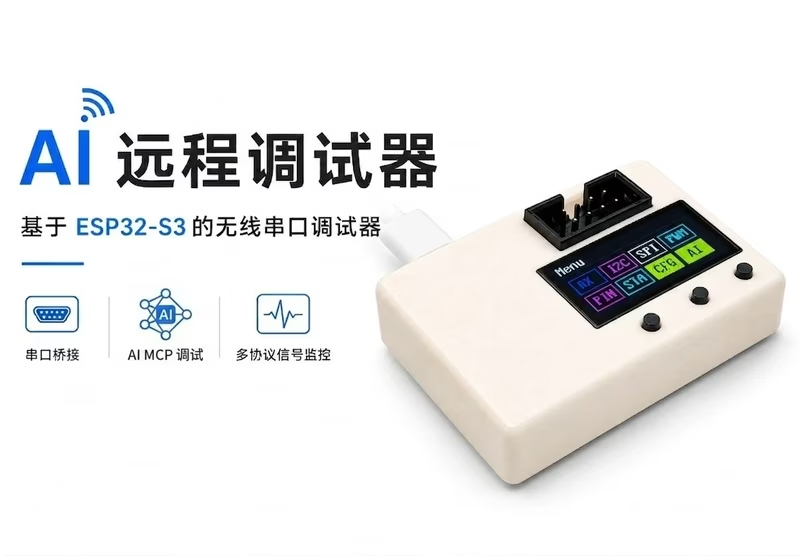
AI Wireless Debugger
An ESP32-S3 multi-protocol wireless hardware debugger that bridges physical debugging interfaces with network services and AI tooling. Built on ESP-IDF with FreeRTOS and lwIP, it supports UART, SPI, I2C, PWM measurement, and CMSIS-DAP SWD debugging alongside an onboard ST7735 LCD and Model Context Protocol (MCP) server integration.
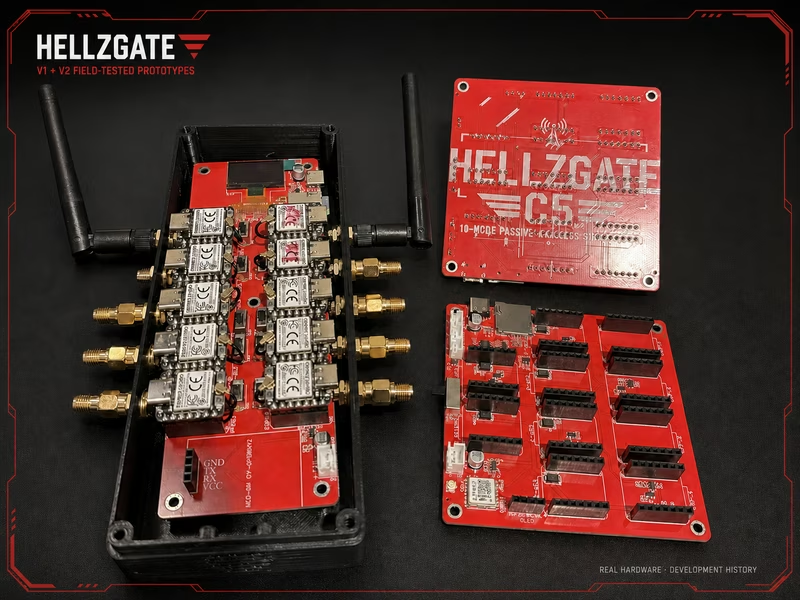
HellzGate
HellzGate is a multi-node wireless research platform built for the Espressif ESP32-C5 microcontroller. Running on ESP-IDF and FreeRTOS, it coordinates a master controller and multiple scanner nodes over ESP-NOW or I²C to perform passive dual-band Wi-Fi and BLE observation logging with GNSS time and location stamping.
HijelHID_BLEMouse
HijelHID_BLEMouse is an ESP32 Bluetooth Low Energy (BLE) Human Interface Device (HID) mouse library built on NimBLE-Arduino. It provides both an interrupt-safe base layer for hardware sensor integration and a high-level macro layer for scripted automation and emulation. The library targets ESP32 microcontrollers with BLE radio support across Windows, macOS, Linux, Android, and iOS platforms.
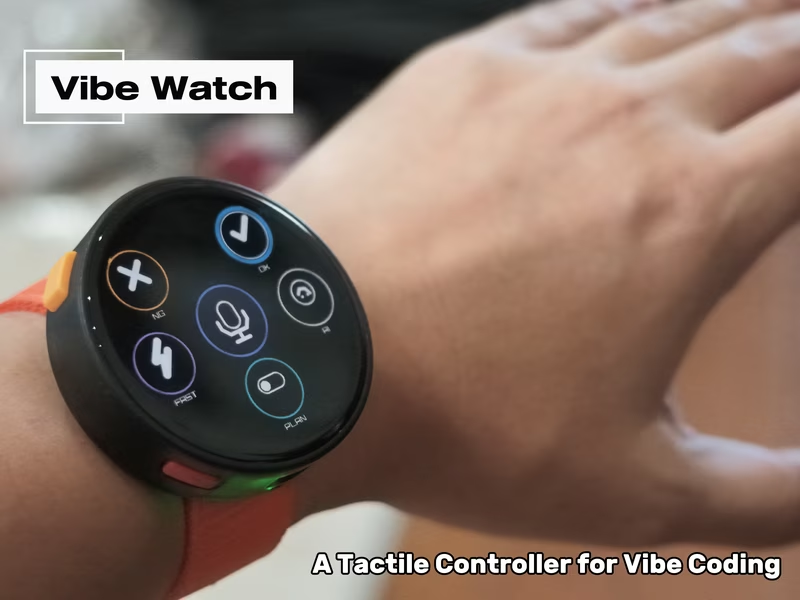
Vibe Watch
Vibe Watch is a wearable, tactile control surface for parallel AI-assisted coding built on the M5Stack StopWatch. Powered by an ESP32-S3, it leverages a 466 × 466 round touchscreen, tactile buttons, sound, and haptics alongside Bluetooth Low Energy to monitor up to six AI agent sessions and provide instant physical approval and voice controls.
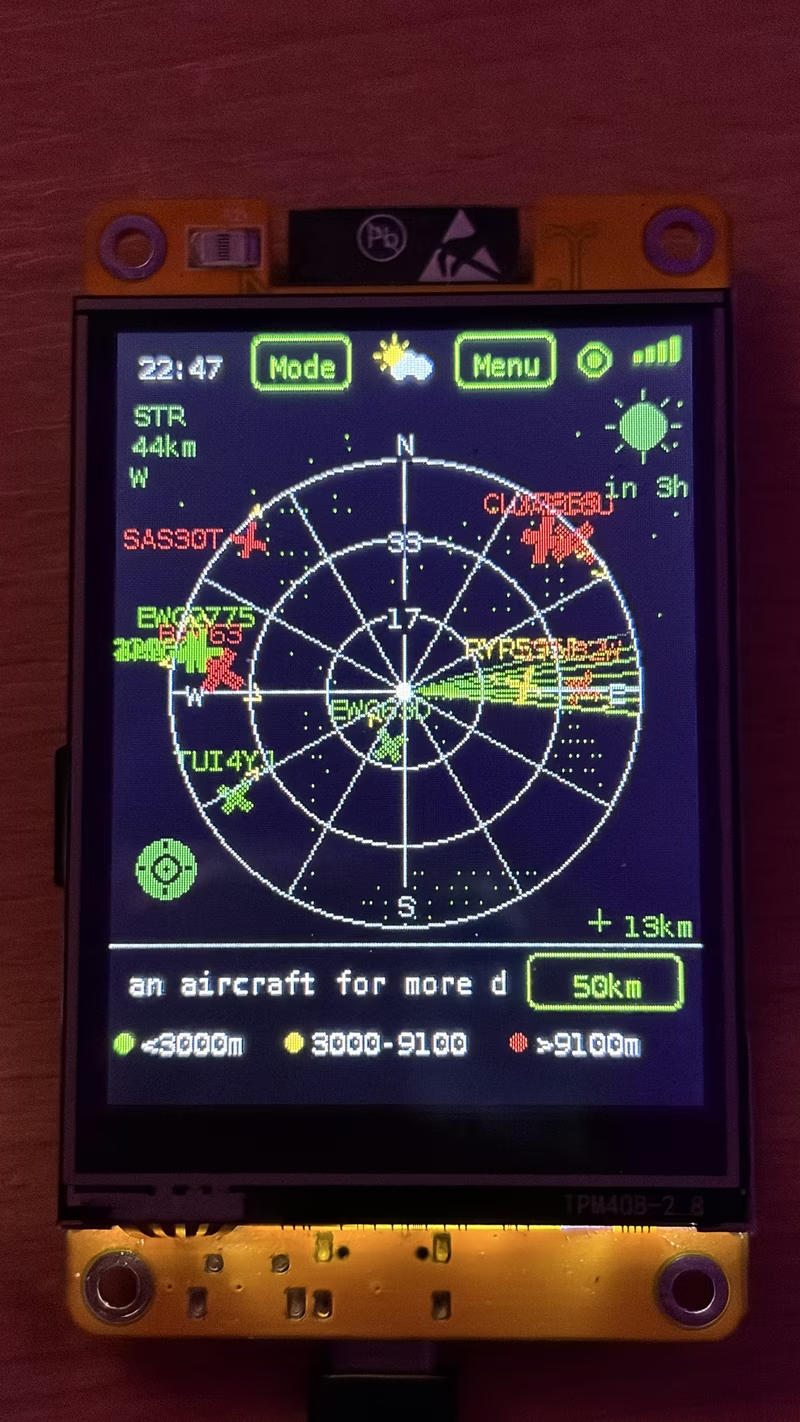
Eiswolfs Flightradar (CYD)
A live ADS-B flight radar firmware for the ESP32-based 'Cheap Yellow Display' (CYD). It tracks nearby aircraft in real-time, featuring a rotating radar screen, detailed flight information, and integration with MQTT and Home Assistant.
ESP32 Display Reader
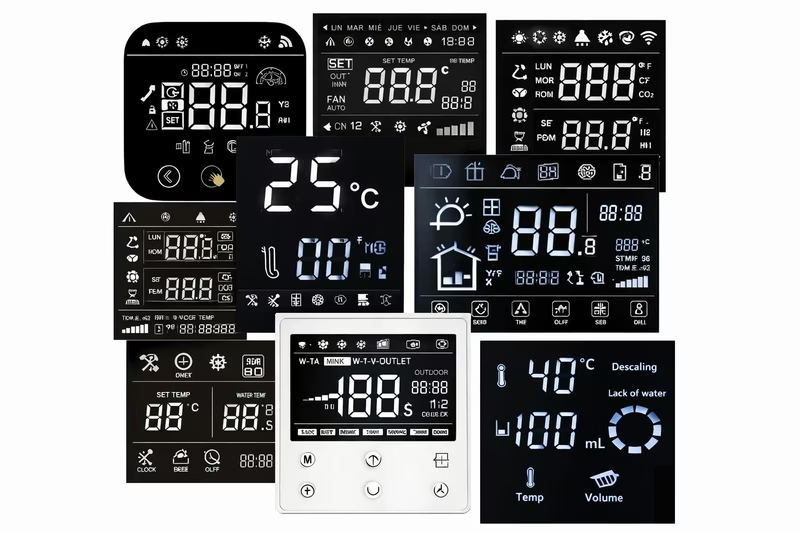
An ESP32-based firmware for optical character recognition of 7-segment displays and status symbols using camera modules. It processes visual data locally and transmits recognized values to Home Assistant via MQTT, featuring a comprehensive web interface for ROI configuration and system management.
ESP32-S3 Ebook
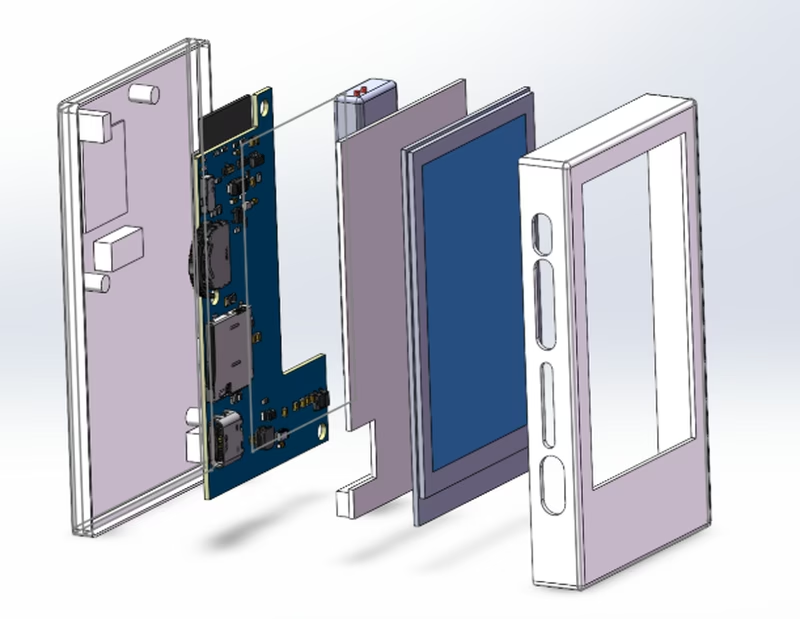
An advanced ESP32-S3-based e-book reader featuring a 2.7-inch E-ink display and a custom-built UI framework. It integrates Wi-Fi/BLE connectivity, audio playback via the ES8311 codec, and a diverse application ecosystem including a reader, notepad, and file manager.
SignalRF
SignalRF is a multi-tool RF analysis firmware for the M5Stack Cardputer, enabling WiFi and BLE sniffing, signal mapping, and ultrasonic detection. Built on the ESP32-S3 platform and FreeRTOS, it provides a portable toolkit for field RF analysis and tracker discovery.